สล็อตเว็บตรง หวยออนไลน์ หวยออนไลน์ สล็อต บาคาร่าเว็บตรง บาคาร่า บาคาร่า บาคาร่า หวยออนไลน์ บาคาร่า บาคาร่า หวยออนไลน์ หวยออนไลน์ บาคาร่า หวยออนไลน์ บาคาร่า หวยออนไลน์ สล็อตเว็บตรง สล็อตเว็บตรง
Sustainability | dtac blog - Part 5
  • Sort by :

Sustainability

Why resilience rests on workers’ wellbeing

With the ongoing social distancing caused by the COVID-19 pandemic, connectivity is a lifeline to our friends, family and jobs. This couldn’t happen without the frontline workers who cannot work from home lest the entire country grind to a standstill. There are the health workers, of course, but also employees of companies deemed essential services, such as supermarkets, banks and mobile operators. On the occasion of International Worker’s Day 2021, dtac spoke to some of our frontline heroes who work tirelessly to connect Thai society to what matters most. Risk Exposure Prateep Yingyong, a field network officer at dtac, performs network installations and maintenance. His job requires him to be on the ground every day, traveling from one cell site to another across Bangkok and its vicinity. Fieldwork is inherently dangerous. Working with tools, working at heights and working in remote areas requires strict guidelines to avoid injury. For example, fieldwork employees like Mr. Prateep are required to wear safety shoes at all times while performing site inspections and are not allowed to be on sites after 6 pm except in the event of an emergency. During the spread of COVID-19, Mr. Prateep sometimes travels to so-called red zones, where COVID-19…


How the son of a fisherman escaped the city by building a business online

Vithan Chaiyo, a 30-year-old native of Chanthaburi province, moved from Bangkok for his secondary education and a bachelor’s degree. After his graduation, he worked as an event organizer for two years during which he felt suffocated by the stress of urban life. Missing the vast expanses of sea and sky of his province, he quit his job and headed back home for a new chapter in his life, one where learning to sell online would play a critical part.  Beginning of Entrepreneurship “I know seafood. I can tell which ingredient is fresh and which is not. I'd go catch squids with my dad during my childhood. Our catch was then grilled for sale. We'd catch many types of mollusks: squid, cuttlefish, bigfin reef squid, and octopus. So, after I returned to my hometown, I used my knowledge to open a small stall selling grilled squid near the beach,” Mr. Vithan said.  The stall, named Hma Khay Hmuk, stands out because of its fresh ingredients. Mr. Vithan has his own pier and fishing trawler, which is moored just a few kilometers away from the stall. Each fishing expedition takes “Roong Tawan”, the boat owned by Mr. Vithan’s father, about five days. Normally,…

How a small Thai town’s pickled crabs became an online sensation

Pickled crabs are a delicacy in Thailand, layering sour and acidic notes onto the sweet umami of raw crab. And nowhere are they quite as delicious as in Chanthaburi, making them as rare as they are delicious. Today, it's a little easier to get your hands on this prized treat. Pookai Dong Klong Khlung is now a household name selling tons of pickled crab online every month. But it took a lot of hard work, and a little help from dtac Net for Living, for its founder Penpan Pongsiri to go from near-bankruptcy to online sales sensation. Sitting on Tessaban 4 Road in Chanthaburi’s Khlung district, Pookai Dong Klong Khlung started as a restaurant. It is decorated in bright orange, the color of crab roe. “Sea crabs from Klong Khlung rank among the best. Our area is the ultimate source of clean, fragrant crabs. Chanthaburi has both freshwater and the sea. The brackish water in the Khlung canal is ideal for crabs,” Ms. Penpan said. Ms. Penpan used to engage in fruit wholesaling – her family business. But four years ago, she noticed the emerging popularity of crabs brined in fish soy sauce and decided to change her path. In the beginning,…

As a brand of chili paste goes online, opportunity returns to a debt-stricken province

As a lawyer in Thailand’s Chainat province, Wassana “Mui” Pinnak has seen firsthand the tragic effects of debt on farmers, who face expropriation when their harvests cannot cover the costs of seedlings and fertilizer. To develop new job opportunities in the region, she launched a brand of Thai chili paste that employs locals to meticulously handcraft her family recipes. With help from dtac Net for Living and under the brand Ban Tanai, her jars of nam prik have since become an online sensation. An Idea Born of the Plight of Thai Farmers The issue of rural debt is particularly glaring in Chainat. In a Thai government ranking of the human development of Thai provinces, Chainat ranked 75th out of 77 (National Economic and Social Development Board, 2017). In 2015, record droughts ravaged the farmlands with devastating consequences.“During a drought, farmers can only grow one harvest,” said Ms. Wassana. “Moreover, many of them borrowed 60,000 baht per rai [1600 sq meters or about 0.4 acres] for rice seedlings from merchants who promised high prices for the rice. Not only did the suppliers not honor those prices, but they forced the farmers to sell their land to pay their debts.” Ms. Wassana saw that…

How a village’s desserts broke a cycle of bad debt

Chai Nat is a small province in the heart of Thailand. The Tha Chin River and fertile soil make it ideal for growing rice, but foodies also love its Taengkwa pomelo, whose thin, slightly grained peel holds treasures of tart sweetness. Despite this bounty, farmers are locked in a cycle of debt and increasingly affected by climate change. dtacblog spoke to Tipwan Netnak, the first female head of Ban Tha Samrong, a village in Chai Nat’s Sankhaburi district. To grow new income streams for her community--and with a little help from dtac Net for Living--she is harnessing the power of mobile connectivity to turn around Ban Tha Samrong's fortunes. “Our hometown used to be so abundant. Each year, we could grow three harvests of rice. But things began to change about eight or nine years ago when the first severe drought hit Chai Nat. As water became scarce, we could only grow rice just once a year. This means our income has also dropped,” said Ms. Tipwan. Fighting Poverty As Ms. Tipwan became village chief around that time, things were off to a rocky start. “Being the first female village head, I was blamed for bringing bad luck to the…

Five Female Leaders’ Views on Leadership at dtac

In celebration of International Women’s Day 2021, dtacblog spoke to five female leaders about women's paths and roles in leadership. Tipayarat Kaewsringam, Chief Sales OfficerAs a female management veteran who has worked in multiple roles across the region and various industries, Ms. Tipayarat was seen the share of women in leadership roles increase over the past decades in Asia. This reflects a significant shift in Asian culture, moving towards a more balanced workplace.In the past, women in Asia might have experienced a barrier to employment in some industries. But today, those obstacles have been drastically reduced in commercial organizations.  “Having more female leaders in senior management can be considered a breakthrough of gender equality in Thai society,” said Ms. Tipayarat. "From change comes opportunity, I #choosetochallenge women to keep growing their capabilities." A female leadership style that is inclusive, open, consensus-building collaborative, and collegial can make a huge contribution to businesses’ success.However, female employees can still face discrimination when balancing family and work. Thus, dtac’s groundbreaking six-month maternity leave can be considered as a policy platform that provides an equal opportunity for women employees. “In the past women had to choose between family and work. But having a six-month maternity leave eliminates…

dtac CEO: zero corruption is fundamental to dtac’s right to operate

Many businesses require a specific license to operate, be it an architecture firm, a hospital or a large restaurant. As CEO of dtac, I work in an industry where the licensing process is particularly stringent and touches on almost every aspect of our business, from the installation of base stations to the rights governing our use of Thailand’s airwaves. But the license I value the most is dtac’s social license. And it is my firm belief that fighting corruption is fundamental to dtac’s right to operate. FREE AND INVALUABLE What is a social license? Unlike government issued licenses, a social license to operate is not a piece of paper. It refers to acceptance of our company’s right to operate by all our stakeholders: the general public, our customers, the media, the government, our shareholders, our employees, etc. And in observance of the International Anti-Corruption Day 2020 on December 9, 2020, I wanted to share how dtac strives to maintain its social license to operate through strict policies against all forms of graft and influence. For spectrum alone, dtac has committed to over 100 billion baht in payments to the Thai government in the last three years. But unlike spectrum licenses,…

dtac Think Hai d: The movement to make mobile phones sustainable

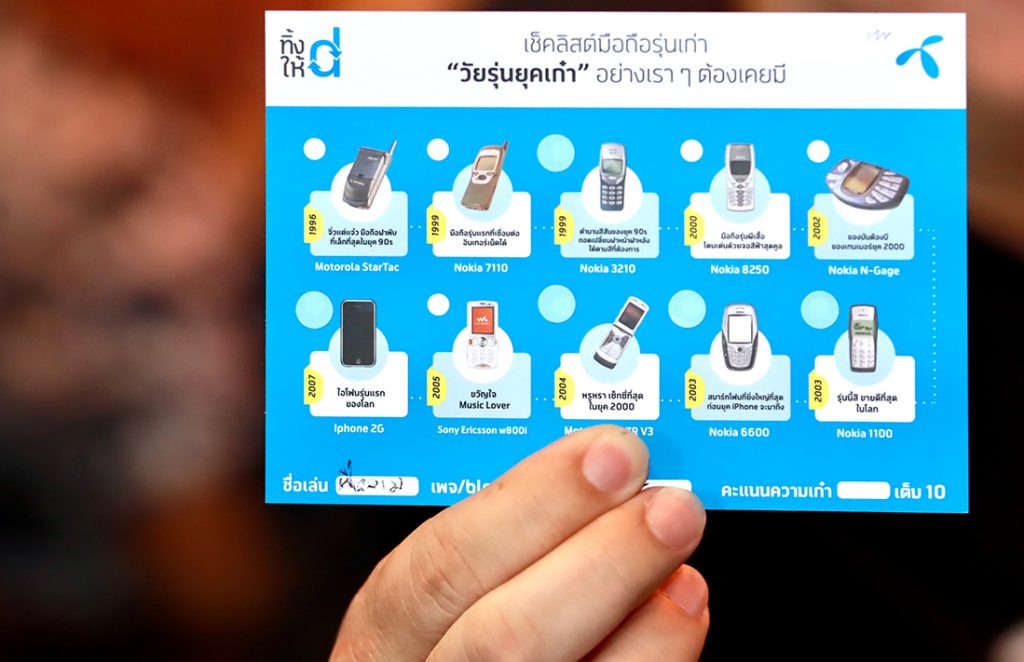
Amidst the rising numbers of handset sales each year, mobile phone makers and retailers are adopting sustainability principles in their value chains. dtac as a key player of value chain of mobile telecommunication industry, is taking a serious action against e-waste disposal through Think Hai d, the initiative encouraging responsible disposal of e-waste. Thailand is considered a country with high mobile internet penetration rates. There are 93.7 million phone numbers, accounting for 133% of its total population. Handset sales stand at 14.1 million annually – with around 100,000 for first time users and the rest for replacement. Replacements alone represent 20 percent of Thailand’s total population on a yearly basis. Peerapol Chatanantavej, Head of Device Portfolio & Device Expert at Total Access Communications Plc or dtac, said, “The boom in sales of handsets over the past decade was mainly caused by the evolution of technology and the tendency of consumers to want a device with more applications. The role of mobile phones is becoming more critical to people’s daily lives.” As the role and features of handset evolve over time, its use reached beyond an IT device for connectivity and became a measurement of social status, driven by factors like…

Taking Kids from Posting Online to Building Online

How the co-founders of FabCafe Bangkok are teaching 21st century skills in dtac’s Safe Internet youth camp Ari is a leafy residential neighborhood in Northern Bangkok. Down one of its quiet alleys, what looks like a home actually houses Thailand’s branch of FabCafe. FabCafe started in Tokyo as a gathering spot for the local community of tinkerers, hackers and designers, before growing to 12 “cafes” globally. But Bangkok’s FabCafe is now also working with a much younger crowd. By partnering with dtac’s second Young Safe Internet Leaders Camp (YSLC 2.0), it is equipping Thai kids with important skills to make their online lives safer and more fulfilling. dtacblog sat with Kalaya Kovidvisith and Samutpon Tanapant. Both are university lecturers and co-founders of FabCafe Bangkok, a place they have defined as “the creative space for design and technology”. They also designed YSCL 2.0 for dtac. Decoding “Learning Design” YSLC 2.0 culminates in its young participants designing projects to make the internet a better place for their peers. Before getting to that point, its first module first requires all camp participants study online privacy and sexual abuse, diversity respect to stop cyberbullying, and the anatomy of fake news. The second module features…

Thailand’s Gen Zs tackle Cyberbullying with Chatbot

When these teenage friends heard of dtac’s Young Safe Internet Leader Camp, they immediately knew they could contribute. Although they come from three different schools, they bonded at a tutorial school. And unfortunately, one thing they had in common is the experience of bullying. This is an all too common problem in Thailand. Surveys indicate about 90 percent of students have experienced physical or verbal abuse. dtac thus joined hands with the Digital Economy Promotion Agency (DEPA) and the Thai Media Fund to organize an online camp where young participants opportunities can develop their ideas to make the internet a safer place for youth. To better understand Thailand’s Gen Zs, dtacblog met 18-year-old Thitapron” Film “ Mangkang ,18-year-old Saharath “Fluke” Suwannawong  and 17-year-old Thanyaluck “Fon” Srirattanai from the Triamudomsuksa Pattanakarn Nonthaburi School; 17-year-old Tanaree “Friend” Prasertdee from the Kasintorn Saint Peter School, and 18-year-old Napat “Totti” Somjaree from the Debsirin Nonthaburi School. Cyberbullying: No Minor Issue The team joined the YSCL 2.0 camp with the project of creating a chatbot named “Ob Oon” (warmth). Their intent was for the chatbot to listen to students suffering from bullying and provide them with advice. "Before we joined the camp, we had only…