สล็อตเว็บตรง หวยออนไลน์ หวยออนไลน์ สล็อต บาคาร่าเว็บตรง บาคาร่า บาคาร่า บาคาร่า หวยออนไลน์ บาคาร่า บาคาร่า หวยออนไลน์ หวยออนไลน์ บาคาร่า หวยออนไลน์ บาคาร่า หวยออนไลน์ สล็อตเว็บตรง สล็อตเว็บตรง
dtac story | dtac blog - Part 9
  • Sort by :

dtac story

To build more robots, dtac is counting on all its people

Internal competition challenges employees with no IT skills to build automation software dtac has set a goal of 100 percent automation for repetitive, rule-based processes by 2023. All employees can build helper robots no matter their IT skill level.Participating employees have positive attitudes towards automation. dtac recently held a botathon, a “robot hacking marathon” where employees race to build software automating the most tedious parts of their work. The competition kicked off dtac’s bold plans to automate 100 percent of repetitive, rule-based tasks by 2023. More importantly, it helped to dispel myths about automation in the workplace. Robot Builders Wanted Robot Process Automation (RPA) consists of building software that can automatically complete human tasks. Although a hot business trend, it also stokes fears of headcount reductions in employees—particularly among those who don’t feel particularly IT savvy. The dtac botathon stressed that no IT knowledge was required to participate and start building robots. And that humans are the key to successful automation.dtacblog sat down with organizers and participants of the botathon to better understand what it’s like to hand over your work to a robot. And why doing so may not be the self-sabotage we fear it to be.Rungtip Suptaweewattana works in dtac’s…
Thai SME Tanakul Workgroup pivots to flexible, connected work to stay ahead of the unprecedented challenges

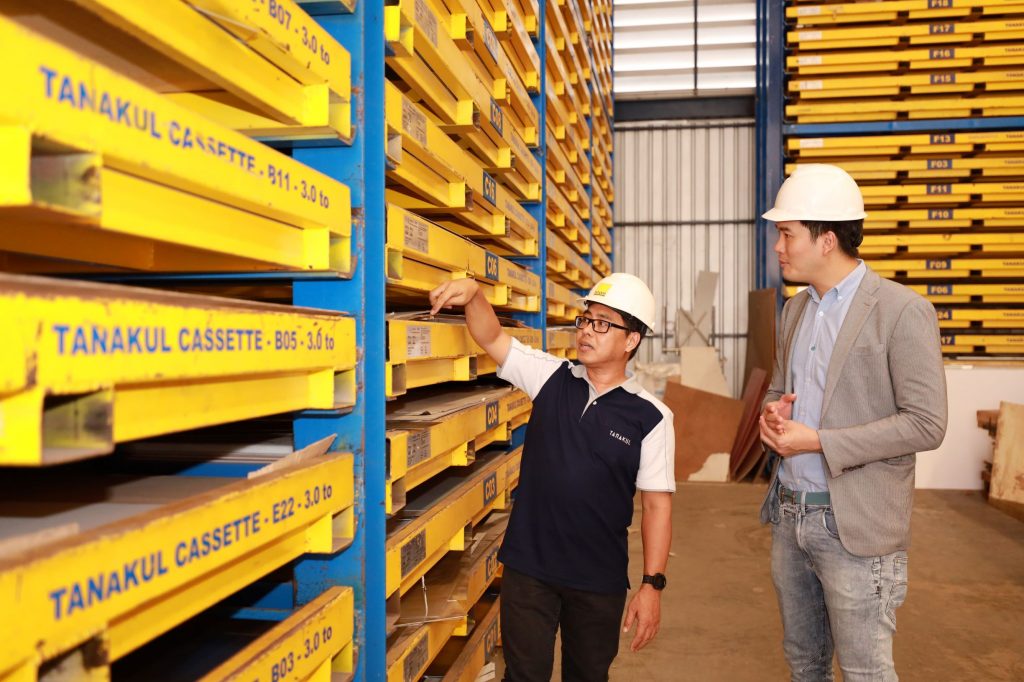
Thailand’s small and medium enterprises have had to leapfrog into advanced connectivity solutions due to the unprecedented challenges of 2020. Without the IT teams or budgets of large enterprises, they must keep their employees and customers safely connected, collaborate in the cloud and maintain uninterrupted digital lines of communication. One such company is Tanakul Workgroup, specializing in custom signage and exhibition space design. Their work requires holding to tight deadlines and working across multiple locations. “Due to short deadlines, a large part of our work is carried out at night. For some projects we even have to build a temporary office at the site. There is a constant need for round-the-clock mobile connectivity between our team members, in order to share large files or conduct video conferences,” said Sermsak Sripongtanakul, Managing Director of Tanakul Workgroup. Innovation Leadership Founded in a small shophouse in 1944, Tanakul Workgroup currently includes four companies and 360 employees split between fieldwork and a 12,800 sqm. factory located on Rama II Rd. The group, which is managed by the Sripongtanakul brothers, provides a one-stop service in product display, event and exhibition design, interior design, and custom-built signage. You can spot their work in the signs at…

dtac’s Photos of the Year

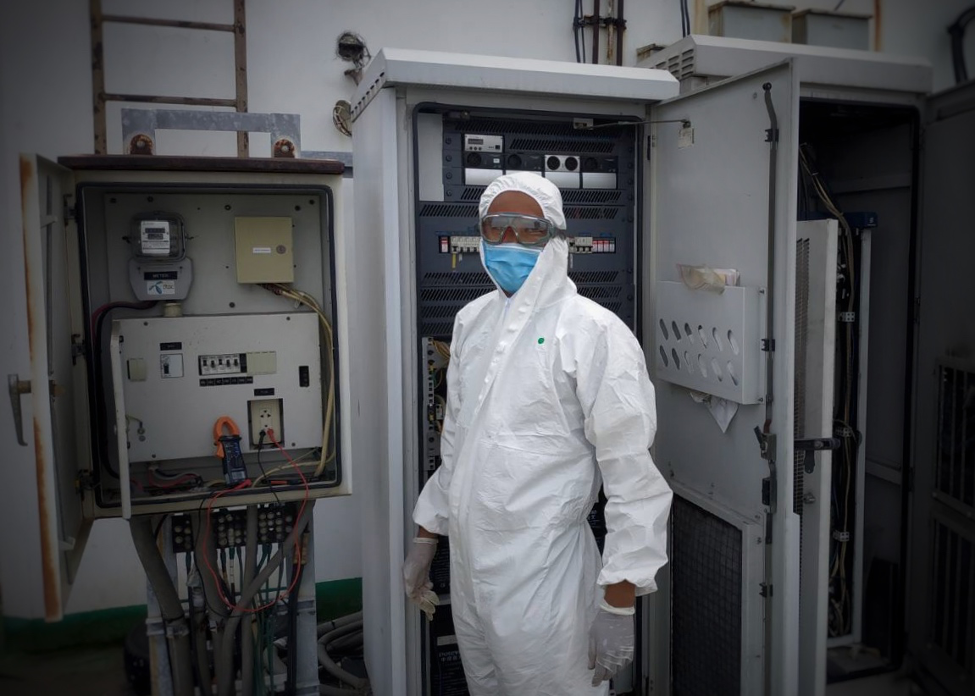
The year 2020 has been repeatedly described as unprecedented—and Time Magazine even dubbed it “the worst year ever”. But it’s also been an opportunity to reflect on our priorities in life.More than ever before, dtac’s twin purposes of “Connecting you to what matters most” and “Empowering societies,” have felt critical to Thailand.As 2020 ends, dtacblog has compiled images retracing some of the year’s defining moments. Think of it as one last look in the rearview mirror as 2021 brings a fresh start. “We were on the frontlines,” Wasan Chanplab, Head of Field Network Operations BMA at dtac.Picture 1 : At the height of the April 2020 COVID-19 lockdown in Thailand, the Field Network Operations BMA’s team rushed to Siriraj Hospital to perform service maintenance. Not only dtac’s network teams worked tirelessly to ensure doctors, nurses and other hospital staff remained connected, but dtac would go on to partner with Siriraj Hospital to onboard chronic patients to the Siriraj Connect application.“We couldn’t let COVID-19 disrupt dtac services—particularly in a hospital. Our team worked even harder to ensure the network was fine. There is no day off in such a crisis. We are on standby round the clock. And we are proud…

dtac CEO: zero corruption is fundamental to dtac’s right to operate

Many businesses require a specific license to operate, be it an architecture firm, a hospital or a large restaurant. As CEO of dtac, I work in an industry where the licensing process is particularly stringent and touches on almost every aspect of our business, from the installation of base stations to the rights governing our use of Thailand’s airwaves. But the license I value the most is dtac’s social license. And it is my firm belief that fighting corruption is fundamental to dtac’s right to operate. FREE AND INVALUABLE What is a social license? Unlike government issued licenses, a social license to operate is not a piece of paper. It refers to acceptance of our company’s right to operate by all our stakeholders: the general public, our customers, the media, the government, our shareholders, our employees, etc. And in observance of the International Anti-Corruption Day 2020 on December 9, 2020, I wanted to share how dtac strives to maintain its social license to operate through strict policies against all forms of graft and influence. For spectrum alone, dtac has committed to over 100 billion baht in payments to the Thai government in the last three years. But unlike spectrum licenses,…

dtac Think Hai d: The movement to make mobile phones sustainable

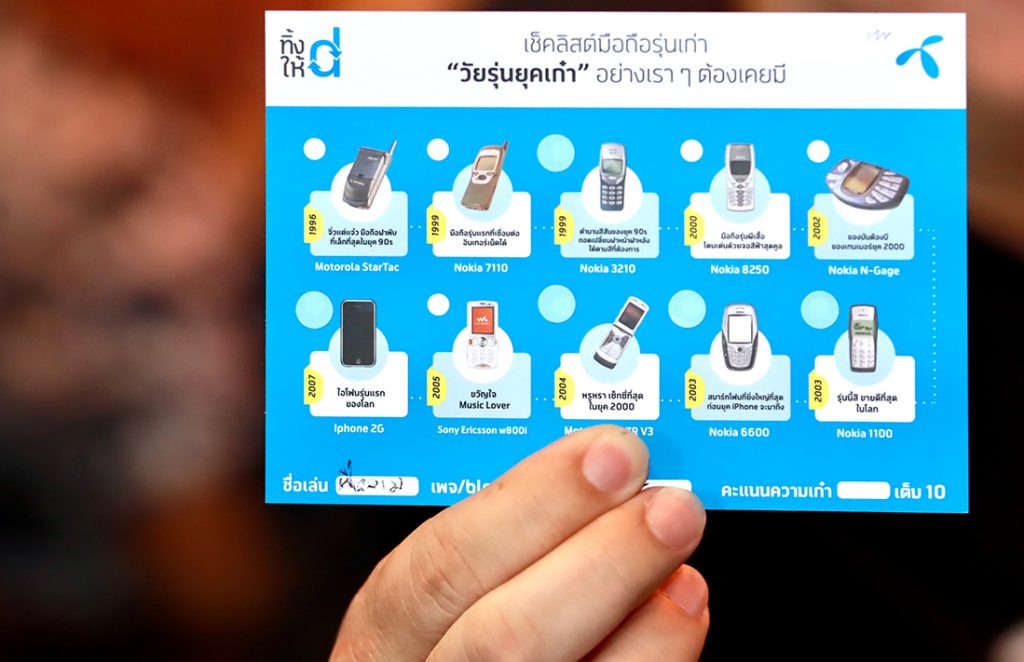
Amidst the rising numbers of handset sales each year, mobile phone makers and retailers are adopting sustainability principles in their value chains. dtac as a key player of value chain of mobile telecommunication industry, is taking a serious action against e-waste disposal through Think Hai d, the initiative encouraging responsible disposal of e-waste. Thailand is considered a country with high mobile internet penetration rates. There are 93.7 million phone numbers, accounting for 133% of its total population. Handset sales stand at 14.1 million annually – with around 100,000 for first time users and the rest for replacement. Replacements alone represent 20 percent of Thailand’s total population on a yearly basis. Peerapol Chatanantavej, Head of Device Portfolio & Device Expert at Total Access Communications Plc or dtac, said, “The boom in sales of handsets over the past decade was mainly caused by the evolution of technology and the tendency of consumers to want a device with more applications. The role of mobile phones is becoming more critical to people’s daily lives.” As the role and features of handset evolve over time, its use reached beyond an IT device for connectivity and became a measurement of social status, driven by factors like…

Princess Maha Chakri Sirindhorn Inspects the 5G Smart Farmer Exhibition

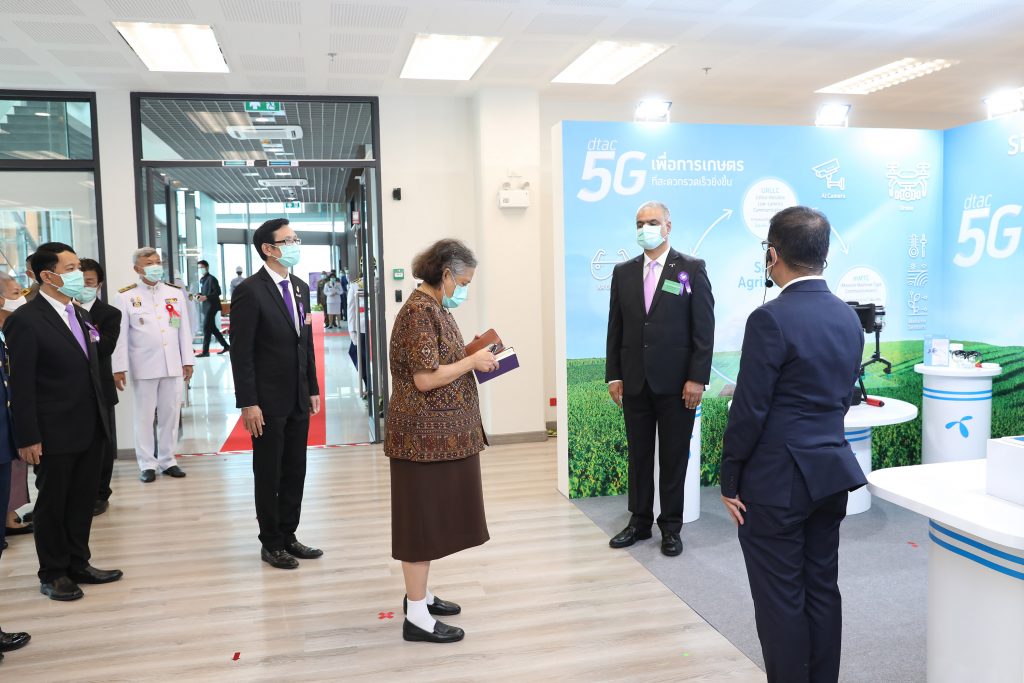
On 3 November 2020, Her Royal Highness Princess Maha Chakri Sirindhorn recently presided over the opening of the Intelligent Operation Center at the Eastern Economic Corridor of Innovation, Wangchan Valley Project (EECi @ Wangchan Valley Project) and inspected the progress of the project. Upon this occasion, Princess Sirindhorn also inspected the exhibitions of various agencies including that of dtac. Mr. Sharad Mehrotra, CEO of Total Access Communication PCL or dtac, was honored to welcome Princess Sirindhorn to dtac’s exhibition and presented how the 5G IoT Smart Farmer solution can lift Thai agriculture. The event took place at the Intelligent Operation Center of PTT’s EECi @ Wangchan Valley Project in Rayong Province. The dtac 5G Smart Farmer solution features smart meters, AI-enabled smart cameras and remotely operated drones. Developed in partnership with Ericsson (Thailand) Ltd., Setha Mongkol 2007 (Thailand) Co., Ltd., Dynamic Intelligence Asia Co., Ltd. and VST ECS Co., Ltd., these tools can increase yields and reduce costs for Thai farmers.    

Smart Energy Management: dtac’s IoT solution for uninterrupted power

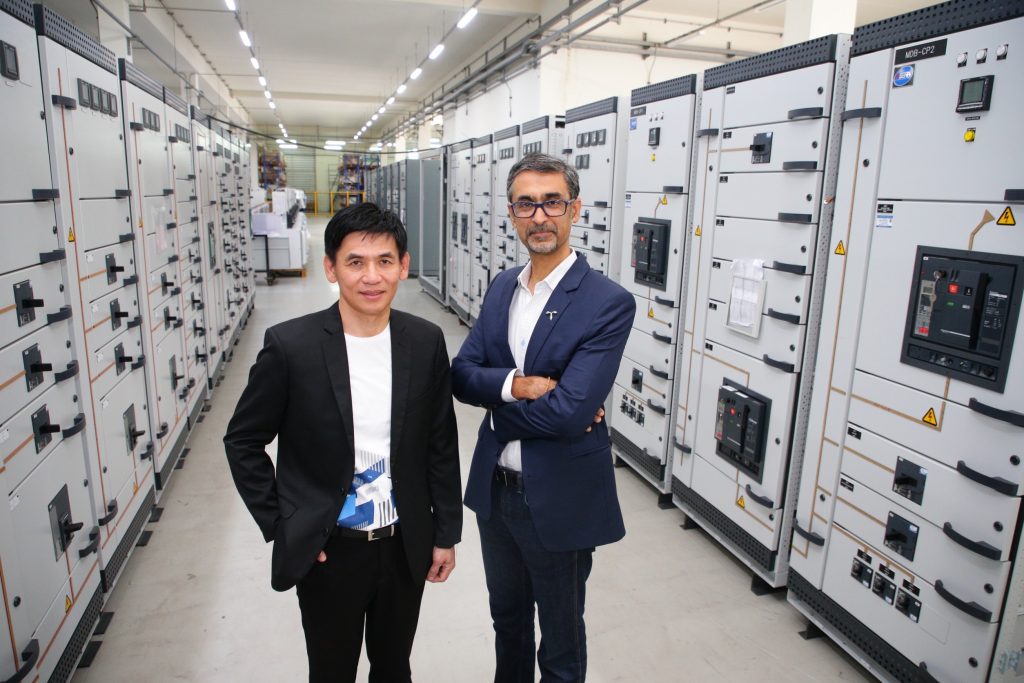
dtac has partnered with Asefa to jointly develop Smart Monitoring and Service Care for Main Distribution Boards (MDB). The cooperation between ASEFA and dtac makes power monitoring more accessible, ensuring uninterrupted power for its users. “You’ve experienced blackouts before. Without power, the temperature quickly rises in homes and offices, computers go dark—you might even get trapped in a lift. When blackouts strike the industrial sector, imagine how much damage they cause. Such scenarios underline the importance of power distribution. It affects all activities in our lives. Power distribution systems must therefore be efficient, safe and stable,” said Phaiboon Angkanakornkul, Managing Director of Asefa Plc. The newly developed solution with dtac features real-time monitoring with simple-to-understand readouts to monitor temperature and humidity. Moreover, the solution can also forecast power demand, display real-time power consumption monitoring and also increase power efficiency. Power: The Key for Digital Transformation Asefa makes main distribution electric switch boards, automatic control system, power management systems, along with after-sales and related engineering services. These are used in industrial plants and medium to large buildings with high power demand needs. The Main Distribution Boards (MDBs) take power from the transformers and channel them to smaller boards. Just like how…

Nakul Sehgal appointed CFO of dtac

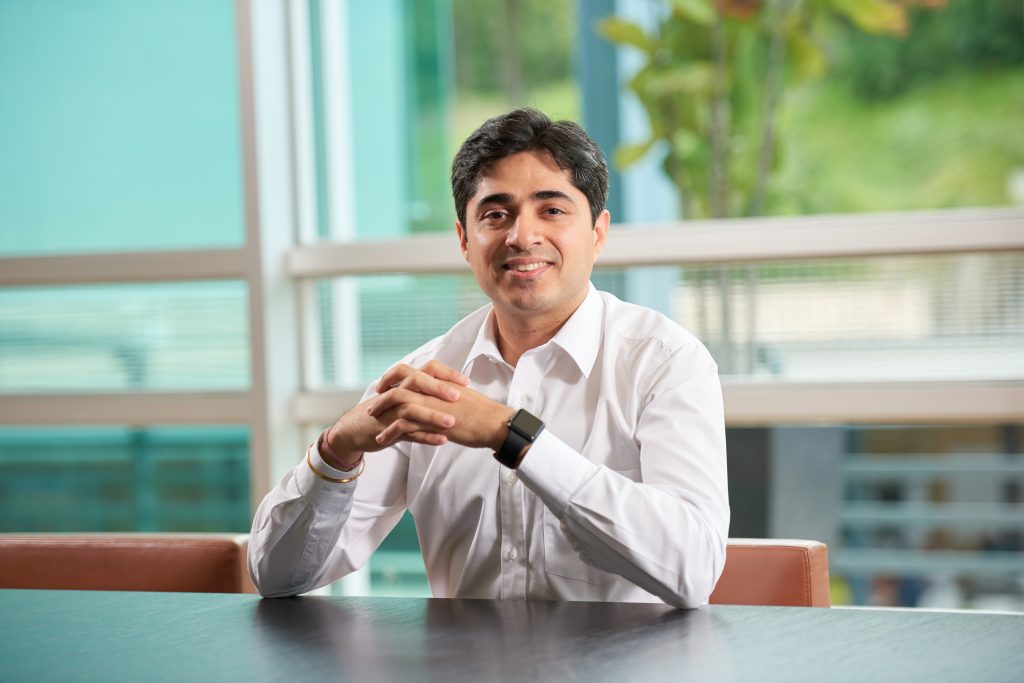
dtac's board of directors has approved the appointment of Mr. Nakul Sehgal as the company’s new Chief Financial Officer (CFO). Mr. Sehgal replaces Mr. Dilip Pal, who is already announced to leave dtac by 31 October 2020. Mr. Sehgal comes with extensive experience in telecom, most recently as the Corporate Chief Financial Officer of Bharti Airtel. He has previously held CFO positions in Digi.com (Malaysia), Telenor Hungary and Telenor India. Mr. Sehgal also has consulting experience working with Ernst & Young and PricewaterhouseCoopers prior to joining the industry. He is a Chartered Accountant and holds a Bachelor of Commerce from the University of Delhi. Commenting on the appointment of Mr. Sehgal, Sharad Mehrotra, CEO of dtac, said: “I am extremely pleased to have Nakul Sehgal join the dtac team. In addition to his strong track record as CFO in companies across multiple markets, . I know Nakul as a strong leader focused on performance and efficiency. With his background, Nakul will be able to add value to dtac and our customers from day one.” Commenting on his decision to join dtac, Mr. Sehgal said: “dtac has been at the forefront of innovation and digitalization, while achieving great results in challenging…

Connecting patients and doctors through dtac’s call center

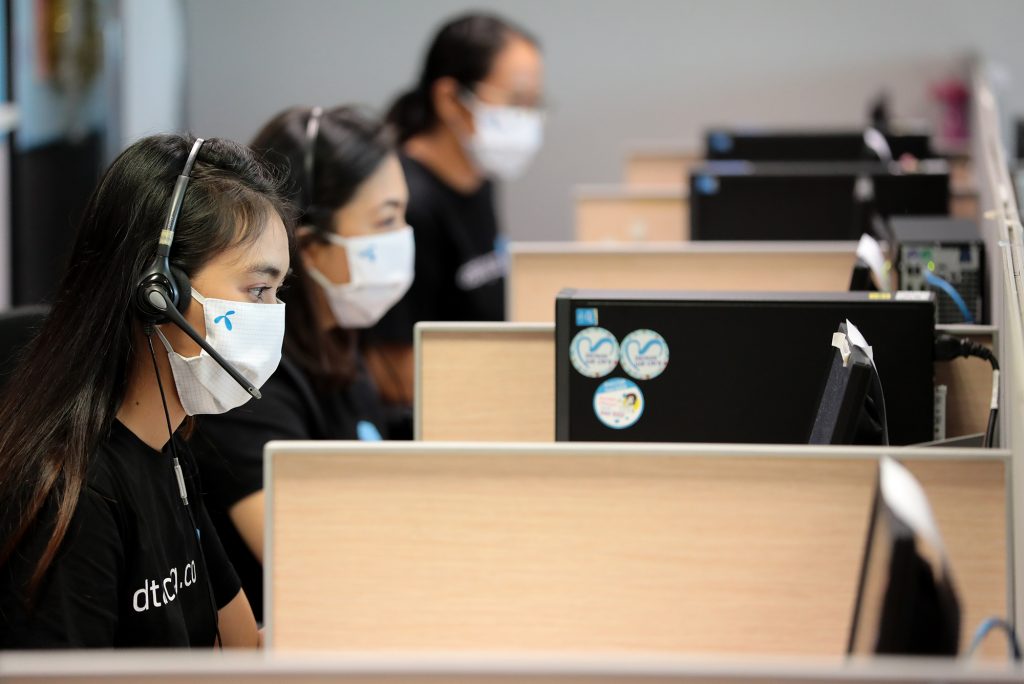
Thailand will become a “full-fledged aged society” in the next 10 years, with one fourth of Thais being older than 60 years. Such demographic trend has significant impacts on public-health services in the regard to the number of patients and the frequency of medical visits. It is going to be more difficult to produce more health professionals to maintain the balance between the demand and supply in the public-healthcare sector by then. Without the balance, Thais’ needs for healthcare services may not be fulfilled with solid quality in the future. To prevent the unwanted situation from happening, Smart Hospital concept has emerged. Many medical facilities have now embraced digital technologies in their bid to increase the efficiency of services and cost management. While these providers of healthcare services seek to better control the cost that has kept rising, they make significant efforts to uphold safety and quality.“Siriraj Hospital”, one of Southeast Asia’s biggest medical facilities, has over 2,000 beds to accommodate inpatients. Each year, it has treated more than 3.8 million services. Siriraj Hospital’s deputy director Assoc. Prof. Cherdchai Nopmaneejumruslers tells dtac blog that his hospital’s five-year strategy (2020 – 2024) has a key goal of transforming Siriraj into a…

How Thailand’s mom and pop shops support mobile connectivity in their communities

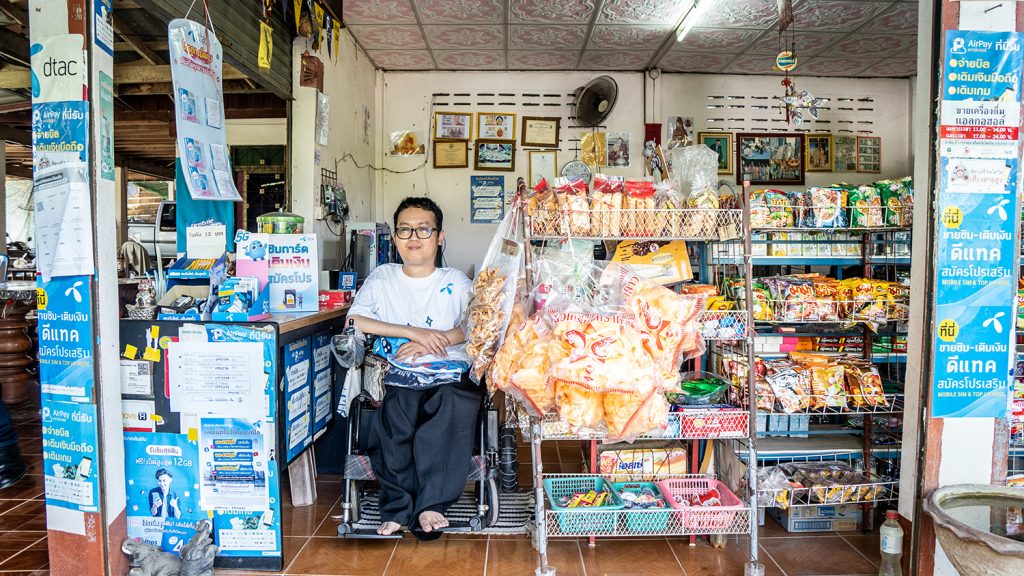
Every day the 34-year-old Tew-Weerayuth Puthawong rises at dawn to get ready before the first customers arrive. Many stop by on their way to work to top-up their mobile phones at his shop in a small village in Phan, a district of Thailand’s Chiang Rai province. And although Mr. Weerayuth serves his customers on a wheelchair, he never lets physical limitations prevent him from connecting his customers to what matters most.When the country was hit by the COVID-19 outbreak, resulting in a city lockdown, data usage grew five times faster in the provinces and residential areas than in central Bangkok. Many people who moved back to their hometown have chosen to remain there as the economic downturn continues. This has made mobile refills in small villages a critical service. “Many people came home during COVID and never went back or tried to find a job in town. Some people run their own business or help their parents on farming and raising livestock. And not everyone has internet at home, so they came looking for prepaid data sims at my shop,” Mr. Weerayuth explained. Several years ago, Mr. Weerayuth, an online gamer, decided to reach out to the dtac sales team…