How Thai startups evolve so far?
dtac accelerate has entered its seventh anniversary. See how dtac accelerate has made a contribution to Thai startups.

dtac accelerate has entered its seventh anniversary. See how dtac accelerate has made a contribution to Thai startups.
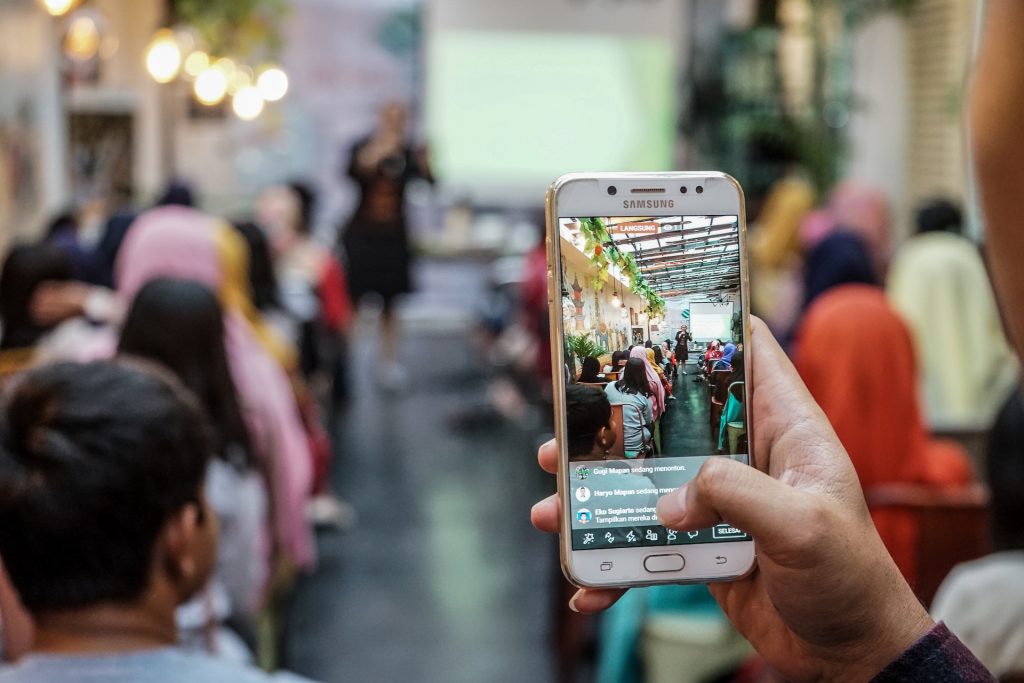
Shopping mall in downtown Bangkok or even market in rural Thailand, could be on the brink of being reshaped by Facebook Live, the feature introduced by the social network platform provider Facebook in 2016. Facebook Live allows its users to broadcast and interact with viewers in real time. According to a study by WeAreSocial 2019, Facebook is ranked the first in terms of monthly traffic in Thailand. It is also listed as the most widely used social media platform in the country. Of Thailand's 48 million Facebook users, 32 million of them use the platform daily In Thailand, small vendors are increasingly using Facebook Live as a sales channel, which ranges from selling clothes, shoes, bag, cosmetics, silk, dried seafood or even gold jewelry. This is a phenomenon that goes well beyond Bangkok and further underscores how rural populations can be empower by mobile technology. A story of a millionaire made from Facebook Live Recently, a news report featured a dried seafood seller who made a fortune from using Facebook Live - Ha Sun. He, 29, earns more than one million baht in revenue nightly from using Facebook Live as a communication tools and sales channel. He goes live on Facebook nightly via his Facebook Fan…
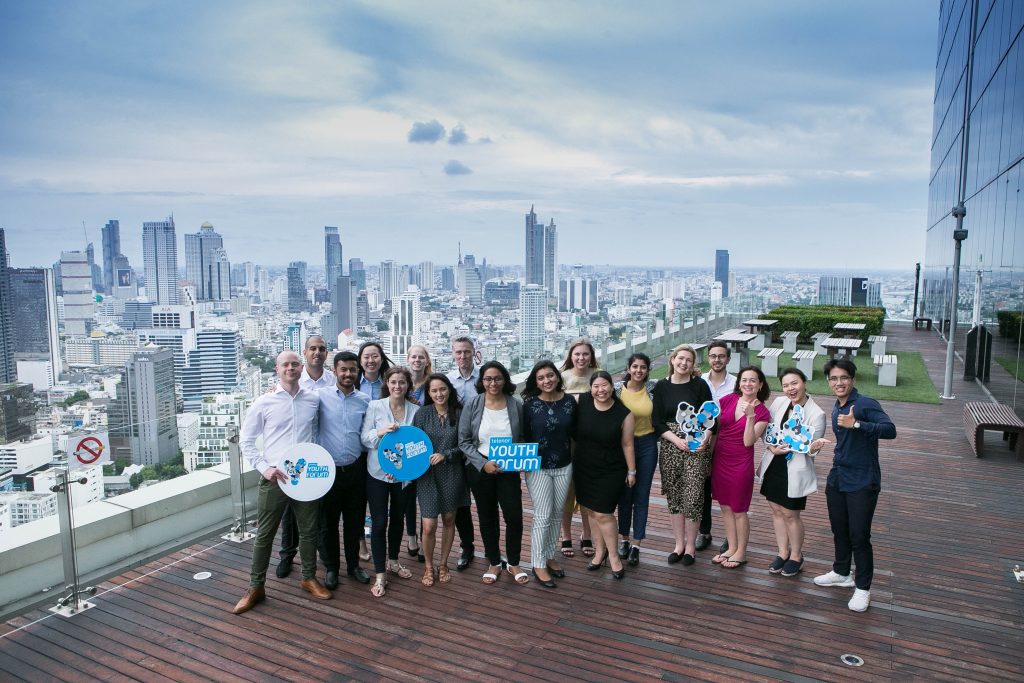
BANGKOK, 29 May 2019 – The Telenor Youth Forum’s 2018-2019 program concluded this week at the dtac headquarters in Bangkok, where the delegation of 16 young leaders from eight nations pitched their four digital services to Telenor Group and dtac leadership, including experts from Plan International, UNICEF and the Nobel Peace Centre, Rakbankerd, and dtac CEO Alexandra Reich. Each year, the Telenor Youth Forum brings together young change leaders for six months of intense development work and remote collaboration spread across nations. There were two delegates from Thailand. Cherngchay Tacho’s team worked on a digital platform to raise mental health awareness. And Thanapa Ukaranun’s team worked on an app to connect the elderly to potential customers interested in learning skills from them, such as cooking or handicrafts. Targeting inequalities in the rice supply chain in Asia, the team of youth delegates behind AgriMatch, a mobile application that uses geolocation to connect farmers to middlemen and vice versa, has won the Telenor Youth Forum 2018-2019 cycle and USD 15,000 (THB477,000) in seed funding. The winning team, AgriMatch aims to pilot their service in Myanmar where more than 70 percent of the population relies on agriculture as their primary source of income,…

Connectivity and digitalization are rapidly transforming the global economy – but where will the biggest impact be felt? To help you find your way in an evolving business landscape, Telenor Connexion has worked with analysts from Stockholm-based consulting firm Northstream to identify five major trends related to IoT and digital transformation. Prediction 1: Enterprise data will take the lead in data trading The abundance of data coming from connected “things” in the IoT has opened up new markets in which data is bought and sold in many forms. While it has been predicted that collected consumer data will be a valuable asset for many companies, there are still many privacy issues hindering the trade personal data. In contrast, enterprises which deploy connected devices and products have an advantage when it comes to turning data into revenue. Aggregated, non-personal data coming from “things” in the IoT will be the “hotbed” of the emerging data trading industry. Prediction 2: Digital value will be unlocked faster IoT newcomers will “leap” over the complexity that first movers experienced and develop IoT solutions in a shorter amount of time and at a much lower cost than previously possible. Early IoT adopters had to do the groundwork…

A new study has found that combining malaria genetic data with human mobility data from mobile networks can help map and predict the spread of drug-resistant malaria. The study was conducted by the Harvard TH Chan School of Public Health, Telenor Group, Mahidol-Oxford Research Unit and the National Malaria Elimination Programme in Bangladesh. The study, mapping imported malaria in Bangladesh using parasite genetic and human mobility data, is one of the largest efforts ever undertaken to quantify the human mobility patterns which spread disease. By modelling population movements that spread new, drug-resistant forms of malaria, the study aimed to help local health authorities track and contain this emerging threat to health in Southeast Asia. Combining epidemiological data, travel surveys, parasite genetic data, and anonymised mobile phone data from Telenor’s local operations, Grameenphone, the study was able to measure the geographic spread of different types of malaria parasites in southeast Bangladesh, including drug-resistant mutations. Data pointed to transmission from outside high-incidence areas, and showed substantial transfer of parasites throughout the Chittagong Hill Tracts in southeast Bangladesh. “Our combined method gave us detailed insight into the direction and intensity of parasite flow between locations,” Hsiao-Han Chang, Research Associate at Harvard T.H. Chan School of Public Health,…

Every 10 to 15 minutes or so, the room dedicated to dtac’s small and medium enterprise customers erupts in clapping and cheering. Each outburst represents a sale, which pops up on all the salespersons mobile devices as a notification, and on flat screens in their open space. This celebration of small wins is just one of the initiatives brought out by Magnus Muller, who joined dtac in June 2018 as the head of its Small and Medium Enterprise (SME) division. Since then, the number of new SME subscriptions sold each month has increased by 220 percent. “Many people are afraid to say they work in sales. People think sales is just a number, just money. I want us to be proud. I want to have that visibility. Every time we cheer, that’s an actual customer we’ve acquired and for whom we can make a difference,” says Magnus. “Celebrating makes us confident.” Magnus also ascribes the team’s success to a heightened empathy for dtac’s SME customers: “I worked in an SME for 10 years. They have such a hard everyday life. They don’t have the resources and internal capacities. They have to do everything themselves: fix the Wi-Fi, clean the toilets,…

dtac accelerate alumni Scoutout co-founder Patinan Vachiramon shares his tips Everyone is scrambling to attract more digital talent to their organization to help them with their digital transformation. The app I co-founded, Scoutout, is a social recruitment platform that allows anyone to be a headhunter and makes job recruitment easy. What remains difficult is transforming the culture in large organizations so that new hires can thrive there. I’ve helped Uber, Google and Line but also am trying to help traditional companies like Krungsri. I understand both sides. In fact, I used to be head of digital at CP All. And you can see the differences quite clearly between tech companies and non-tech ones that want to grow tech. For tech companies, it’s easier to recruit and retain. They’re built for it, built for this culture. At Uber or Youtube, for example, your rank is secret. Because tech projects require people to work across the board, tech companies want to remove the issue of whether an assistant feels comfortable chasing a chief about his project. The want the process to be work-centric, not rank-centric. The other issue that removing rank resolves is that most tech talents are below the age of…

While Indonesia, Malaysia, Singapore and Vietnam are home to so-called unicorns, or startups worth over US$1 billion, Thailand has yet to produce a startup of that size. dtac accelerate has identified Series A funding as a critical first step towards that goal. Series A funding for startups is typically between US$5 to 15 million. As a result, on 1st – 3rd April, dtac accelerate startups attended the bootcamp, A-Academy! Bootcamp, where they had a chance to meet with Asian leading VCs, which were Ms. Pahrada Sapprasert, director of 500 Tuk Tuks, Mr. Jeffrey Paine, fund manager of Golden Gate Ventures, In Young Chung, Global Investment of Line Ventures, Koichi Saito, founder and fund manager of KK Fund, Albert Shyy, principle of Burda Principle Investment, and Justin Nguyen, principle of Monk’s Hill Venture, as their personal mentors by sharing the expertise and driving dtac accelerate startups to the Series A Fund Raising. A-Academy Bootcamp provided interesting activities for startups such as… The fund raising simulation where startups had a chance to get feedback in person from VCs. This 1.30 hr long activity was for startups to present and figure out way to improve the business in order to attract more investors…

April 10, 2019 – dtac pays a minimum revenue of 603,806,875 baht from providing the service on the 1800 MHz and 850 MHz spectrum during the subscriber protection period between September 16 to December 15, 2018 after the expiration of concession on September 15, 2018 to the NBTC. dtac and CAT jointly submitted a protection plan to the NBTC on June 7, 2018 for the many subscribers still using 800 MHz and 1800 MHz spectrum, a bandwidth operated under a concession between CAT and dtac, which expired on September 15, 2018. The protection plan provided remedy measures to assure customers continuous services without any SIM blackout. Ms. Alexandra Reich, Chief Executive Officer, Total Access Communication PLC or dtac, said, “dtac makes the minimum payment for the revenue 603 million baht from providing services on 1800 MHz and 850 MHz spectrum under the customer protection period after received a letter of notification from NBTC. dtac emphasizes the benefits to customers of uninterrupted services and want to maintain service quality in accordance with relevant NBTC measures and announcements.”

Telecoms are considered one of the most highly competitive industry. Price is no longer an effective differentiator. That’s why customer experience is what telecom companies are moving towards. A study from Analysys Mason showed that every one percent increase in telco’s Net Promoter Score results in a four percent decrease in churn. It means that brands should understand more customers individually. dtac’s SATYA project was formed with the mix of different unit employees - market insight, prepaid and postpaid market and brand communications - to identify its customer segments and find out the shared values between dtac and its customers. And that’s the first step of understanding its customers. And one of project members was Kasidis Satangmongkol, a data scientist in the customer value management division. He oversaw dtac's customer segmentation, allowing a better understanding of its 20 million customers. "Customer segmentation was conducted by both quantitative and qualitative research to measure customer attitudes and behavior. Subsequently, we brought a huge amount of collected customer data usage to match with each segment," he said. From the research, five segments were identified: Offliner They are mostly retirees residing upcountry. National TV channels and other traditional media remain their main consumption. But they still use feature phone…


© 2020 Total Access Communication PLC.,
Part of Telenor Group