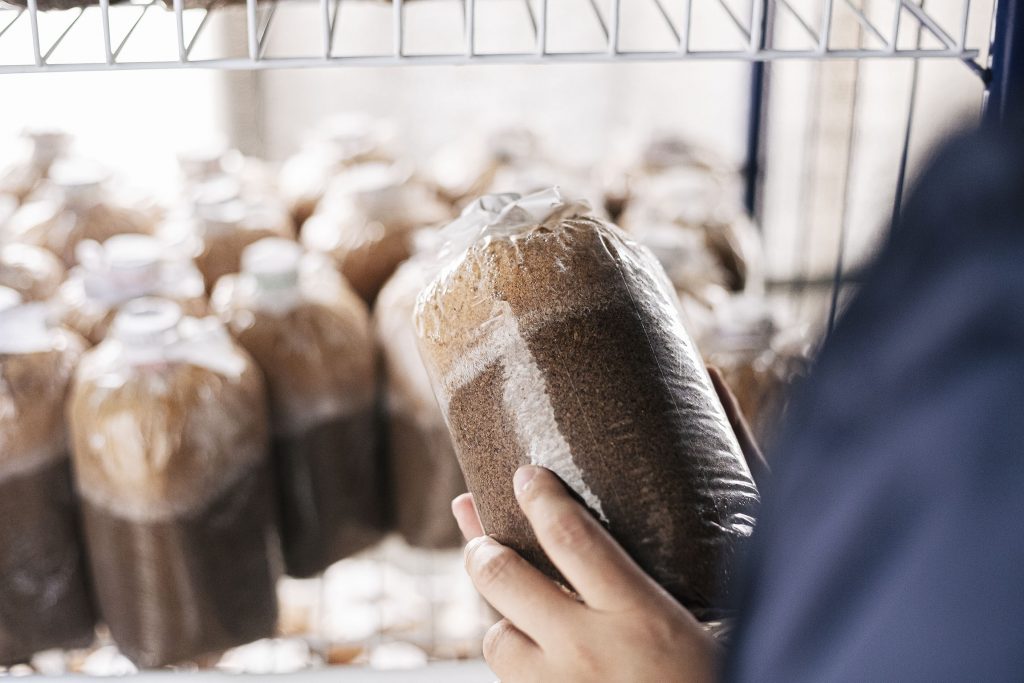
Leveraging its biotech expertise and supporting Thailand’s key biological infrastructure, NSTDA has engaged BIOTEC in “Smart Farm Research Project: Case Study of Lingzhi Mushroom”. The project’s Phase 2 is now ongoing, with Thitiya Boonpratuang, leader of the Mushroom Research Team at Biobank, on board.
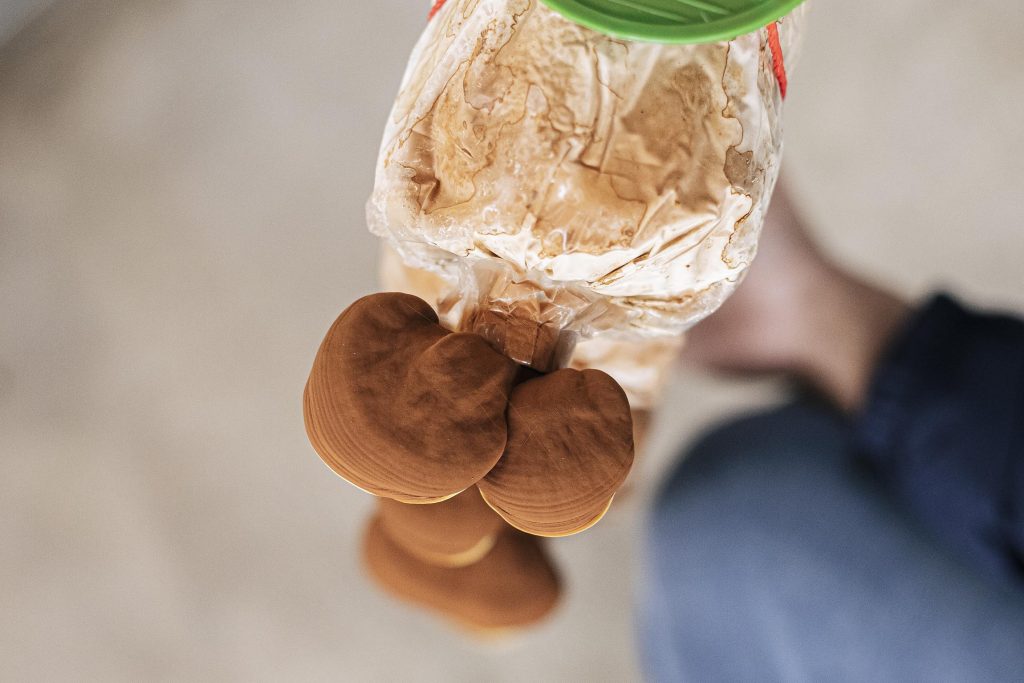
Lingzhi is a fungus. Some parts of its cells are like those of animals, but other parts share similarities with plants’ cells. According to prior research, Thailand has 14 Lingzhi species and 140 Lingzhi subspecies, each with different characteristics. In the same environment, some have much more fiber than others. Others, meanwhile, boast a larger cap, or are richer in important substances.
Ms. Thitiya explained that the productivity of plants and microorganisms depends on two key factors – genetics and environment. “Genes have crucial importance. They must be good. Environmental factors come next. If genes are bad, no matter how much we adjust the environment, our efforts will be fruitless,” she said.